Endovascular Guide Wire misplacement is a small error with outsized consequences – more time on the table, creeping radiation dose, extra contrast, vessel trauma, and ultimately higher patient risk. From Demax’s vantage point as a manufacturer, prevention is not only a training priority; it is a design brief. In this article, we unpack common pain points in the lab, actionable ways to avoid misplacement, and how the upcoming Demax Peripheral Vascular Guidewire helps clinicians keep the tip in the true lumen with confidence.
The Real Cost Of Misplacement In Peripheral Work
Peripheral anatomy is rarely simple. Tortuous iliac loops, calcified SFA segments, and spasm-prone tibials turn routine progress into a negotiation. Misplacement often starts with subtle issues – dampened tactile feedback, uneven friction, or tip behavior that changes at tight bends. These small cues can lead to subintimal passage, false-lumen entry, distal perforation, or loss of position. Each event adds fluoroscopy time, triggers device exchanges, and raises the chance of abandoning the case.
In our field testing and engineering reviews, three drivers recur: visibility, friction, and control. Poor fluoroscopic visibility hides micro-movements of the distal tip. Excess friction causes stick-slip and sudden jumps. Inconsistent torque transmission blunts steering. Materials and geometry are the countermeasures. Core alloys set push and support; surface coatings set lubricity; the distal tip sets finesse and safety. With that in mind, the Demax Peripheral Vascular Guidewire is being developed with high-quality stainless steel or nitinol for balanced strength and flexibility, plus a hydrophilic coating to lower friction in narrow or calcified segments. A radiopaque tip improves tip tracking under fluoro, helping teams confirm true-lumen alignment quickly.
✅ Frequent Pain Points Noted By Operators
• Unpredictable tip behavior in calcified or stenotic lesions
• Distal tip hard to track during very small movements
• Sudden releases from friction leading to subintimal slips
• Insufficient support after crossing when delivering devices
These issues are solvable when technique and tool design work together.
Prevention You Can Use Today
Demax advocates a simple playbook that works across angiography, angioplasty, stenting, atherectomy, thrombectomy, and embolization. The goal is consistent: keep the Endovascular Guide Wire centered, visible, and controllable.
- Optimize Visibility And Tip Discipline
Keep the tip in view at all times. Use short, deliberate movements and confirm direction before advancing across ambiguous planes. Re-angle the C-arm if vessel overlap obscures the path, and leverage roadmap overlays for micro-navigation. A radiopaque tip turns these checks into fast, low-dose decisions.
- Control Friction, Don’t Fight It
Hydrophilic surfaces help the wire glide in tight or calcified channels. Pre-wet the wire, advance in small increments, and avoid loading the system with excessive push. The Demax hydrophilic tip coating is engineered for smooth advancement at low force, lowering the risk of dissection from overpush – a practical benefit for a hydrophilic endovascular guidewire for tortuous vessels.
- Escalate Strategy Intelligently
Begin with a flexible, trackable profile to scout a path. Upsize support only when needed for device delivery. Maintain coaxial alignment with compatible catheters to reduce tip chatter. If resistance rises abruptly, stop. Reassess the angle, change projections, or downsize. Fast course corrections save time and tissue.
✅ Make Communication Part Of The Technique
• Agree on “stop rules” (e.g., check fluoro every few millimeters in tough segments)
• Call out thresholds for radiation and contrast before starting
• Record difficult segments for future cases and training
These habits reduce surprises, especially in long infra-inguinal work where fatigue can mask subtle changes in tip feel.
How Demax Design Choices Help Prevent Misplacement
As we refine the Demax Peripheral Vascular Guidewire, our aim is to translate prevention principles into hardware advantages that are easy to feel and see under fluoroscopy.
- Materials And Build For Predictable Control
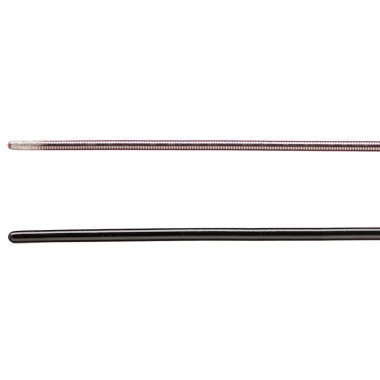
The wire uses high-quality stainless steel or nitinol alloy to balance push, support, and flexibility. A PTFE-coated core wire surface stabilizes torque transmission, so steering remains consistent through curves and lesion transitions.
- Hydrophilic Coating For Smooth Passage
A Demax hydrophilic surface – focused on the distal region – reduces friction and stick-slip. The result is low-force, controlled micro-advancement that helps keep the tip centered during crossing and reduces the chance of subintimal drift.
- Radiopaque Tip For Confident Positioning
Tungsten-containing polyurethane and radiopaque engineering make the tip conspicuous under fluoro, even with tiny movements. Faster visual confirmation means fewer unnecessary pushes and fewer course corrections.
- Trackability And Support Where It Counts
Optimized flexibility and trackability help the wire maintain purchase in tortuous pathways, while providing reliable support for crossing stenotic lesions, delivering therapeutic devices, and retrieving embolic material.
✅ Specifications That Meet Real-World Needs
• Diameter Options: 0.014″ to 0.038″ for case-matched selection
• Lengths: 40 – 300 cm to suit access route and device plan
• Configurations: Angled or straight tips; effective lengths of 110, 182, and 300 cm
These choices let clinicians tailor the Endovascular Guide Wire to anatomy, access site, and therapy. For complex PAD or below-the-knee work, many teams will favor 0.014″ or 0.018″ for finesse and reach; for larger peripheral segments, stepping up diameter improves push and support. In each scenario, the guiding idea is the same: see the tip, feel the path, and glide rather than force.
- Application Scenarios Across The Peripheral Spectrum
The Demax platform is being developed for selective catheter guidance in angiography, lesion crossing for angioplasty, precise delivery for stenting, controlled positioning in atherectomy, clot retrieval in thrombectomy, and targeted placement for embolization. In each task, visibility, lubricity, and controllable torque reduce misplacement risk and help teams proceed with fewer delays. For searchers comparing options, this design direction aligns with the long-tail intent behind best guidewire for peripheral angioplasty.
Closing Words
If your lab is working to cut radiation time, reduce contrast load, and prevent Endovascular Guide Wire misplacement, we’d value a conversation. Contact Demax for technical briefs, early evaluations (as available), and a practical checklist for guidewire selection in complex peripheral cases. Together, we can turn small navigational wins into safer, faster procedures and stronger patient outcomes.