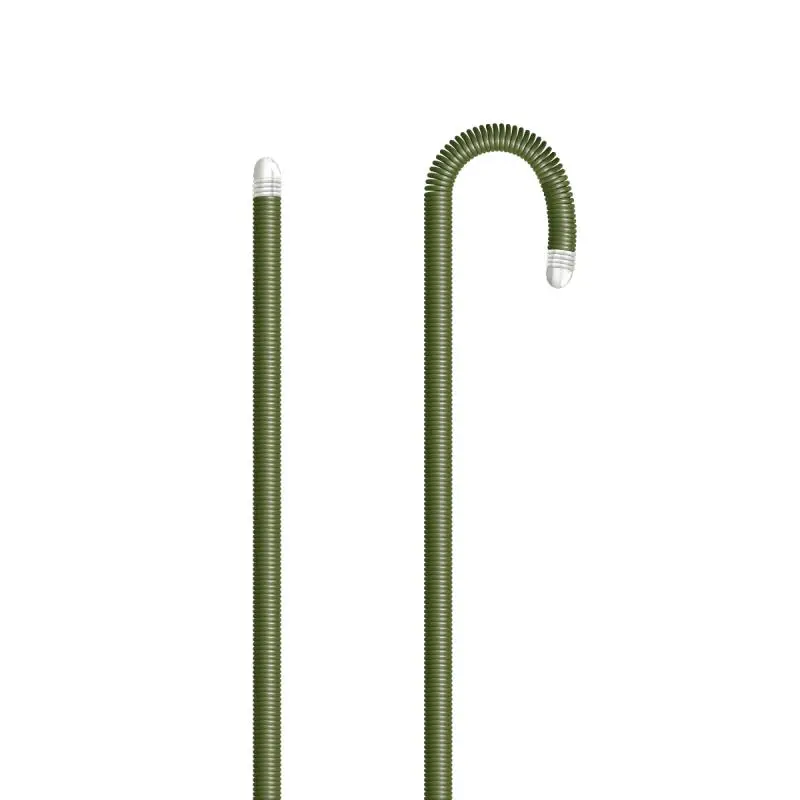
Coronary Guide Wire technique can change the course of a case. At Demax, our movable-core guidewires are engineered to deliver precise control, smooth advancement, and crisp fluoroscopic feedback. Below, we share practical, field-ready methods and show how Demax construction – materials, tip geometry, coatings, and markers – helps you cross, deliver, and deploy with confidence.
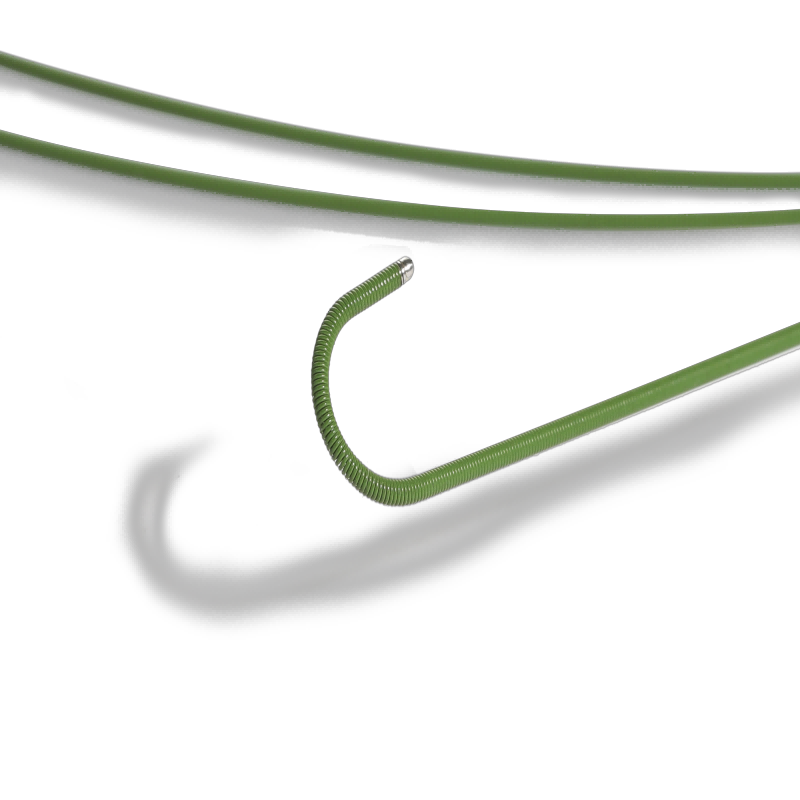
Why Technique And Construction Work Hand In Hand
Busy labs face the same trio of pain points: time loss, vessel trauma, and inconsistent device delivery. Tortuous paths, diffuse disease, and sharp bends can turn a standard case into a struggle. That is where a movable-core design pays off. Demax pairs a flexible outer wire with an independently movable core made from stainless steel or nitinol. The outer wire follows complex vessels; the core advances or retracts to tune support and tip response – without disturbing shaft position. Radiopaque markers add clarity under fluoroscopy, guiding accurate catheter and device placement.
For consistent feel, Demax uses 304V stainless steel for the core, winding, and safety elements, and a PTFE pre-coated surface for uniform finish and low insertion/withdrawal force. A smooth tip-to-shaft transition reduces trauma as the system navigates bends and plaque. The result is predictable push, dependable torque, and clean imaging – hallmarks of effective Coronary Guide Wire performance.
✅ Demax Movable-Core Guidewire At A Glance
• Independent Core Movement – Advance or retract to modulate support in real time.
• Flexible Outer Wire – Tracks tortuous segments with less resistance.
• Radiopaque Markers – Enhance visibility for precise landing zones.
• PTFE Surface – Uniform finish, minimal friction, smooth passage.
• Tip Options – J-tip or Straight to match lesion strategy.
Technique Essentials For Everyday Cases
Technique is about matching wire behavior to each procedural step. The following tactics use the movable core and tip choices to streamline coronary and peripheral workflows.
- Access And Initial Crossing
Start with a Straight tip for direct engagement or micro-channels. Switch to J-tip when you prefer wall tracking and lower perforation risk. Keep the core partially retracted early to maximize flexibility through curves. Under fluoro, verify distal location with the radiopaque markers before escalating force or support. This measured sequence reduces exchanges and preserves the endothelium – especially important for Coronary Guide Wire work in calcified, angulated, or diffusely diseased segments.
- Navigating Tortuosity Without Losing Position
When the vessel tightens, retract the core slightly to soften the distal segment and proceed with short, controlled rotations. If support fades during device advance, feed the core forward by millimeters to stiffen the system – without moving the outer wire. This is the power of a movable-core design: support on demand while protecting your hard-won position. If more glide is needed, pair with a compatible microcatheter; the Demax PTFE coating already lowers friction and helps defend the vessel wall.
- Device Delivery And Exchange
During balloon or stent delivery, increase core support just enough to prevent buckling and maintain coaxiality. Use marker alignment to confirm landing zones under fluoroscopy. For wire exchanges, low withdrawal force helps limit kickback; hold the outer wire stable while adjusting the core to maintain tip control. These methods translate well to a PTFE-coated coronary guide wire 0.035 inch setup and to peripheral segments where device lengths and profiles vary.
• Micro-Adjust Support: Advance the core in millimeters, not centimeters.
• Protect The Intima: Favor a soft-tip entry; escalate only when needed.
• Use Visual Cues: Track markers to validate tip-to-device relationships.
• Keep It Smooth: PTFE finish plus gentle torque yields predictable tracking.
Product Fit, Specifications, And Clinical Scope
Demax builds for versatility while protecting tactile feel. Our Movable-Core Guidewire line supports coronary intervention, peripheral intervention, and broader image-guided procedures where access and stability matter.
• Construction And Materials
We integrate core wire, winding wire, and safety wire in 304V stainless steel for strength and resilience. The wire is PTFE pre-coated for a uniform, low-friction surface. Select models incorporate hydrophilic segments to facilitate passage in challenging paths. A smooth transition from tip to shaft is engineered to lower trauma during navigation.
✅ Dimensions, Tips, And Classification
• Diameter: 0.035″
• Lengths: 125 cm / 150 cm
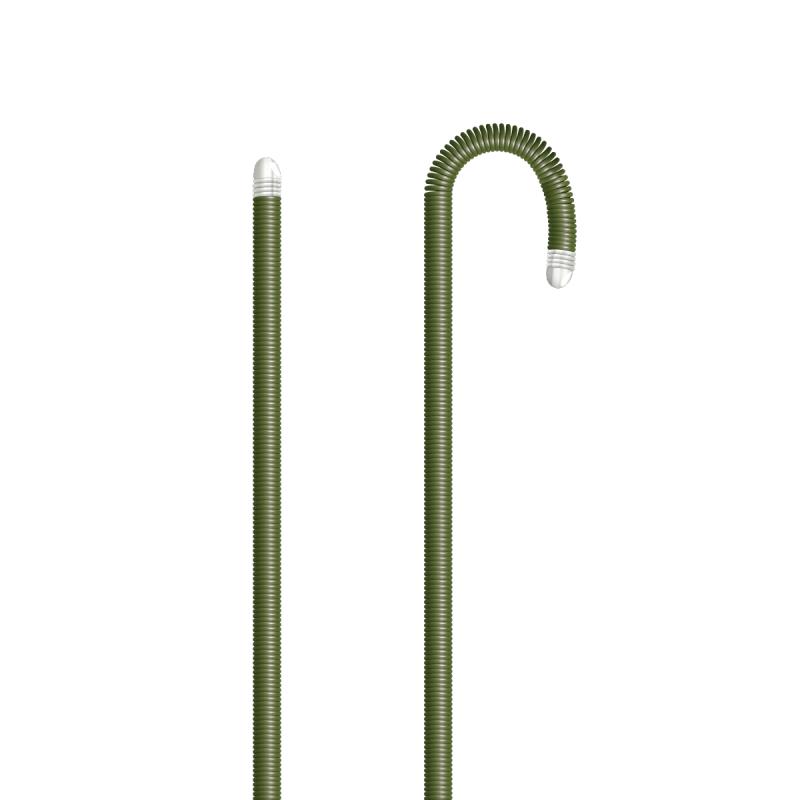
• Tip Shapes: J-tip or Straight
• Use Case: Therapeutic Guidewire – Coronary Intervention / Peripheral Intervention
✅ Clinical Benefits In Daily Practice
• Easy Navigation: Low friction supports steady advancement in narrow or angulated segments.
• Tip Versatility: J-tip and Straight options match lesion entry strategy and operator preference.
• Excellent Maneuverability: Movable core fine-tunes support without shaft relocation.
• Finger Straightenability: Practical handling in fast-paced labs.
• Where It‘s Used
Based on the given indications, movable-core guidewires are applied in: peripheral vascular interventions (angiography, angioplasty, stenting), cardiac catheterization, neurointerventional procedures (embolization, thrombectomy, coiling), interventional radiology (embolization, venous access, drainage), and selected electrophysiology tasks (lead placement, ablation access). These use cases highlight the value of a movable-core guidewire for coronary intervention that also adapts to complex anatomies elsewhere.
✅ Practical Purchasing Notes
• Model Selection: Choose J-tip when vessel wall tracking and safety are priorities; choose Straight for direct lesion entry.
• Length Planning: Match 125 cm for routine work; 150 cm when exchanges or longer device paths are expected.
• Support Strategy: Start flexible; add core support as devices advance or when encountering resistant segments.
Final Words
Ready to benchmark Demax against your current Coronary Guide Wire? Request samples, book a demo, or ask for a technical datasheet to compare models side by side in your lab’s workflow. We can also provide brief in-service sessions on movable-core techniques for your team. Demax focuses on clarity, control, and consistency – so each crossing, delivery, and deployment feels deliberate, not improvised.